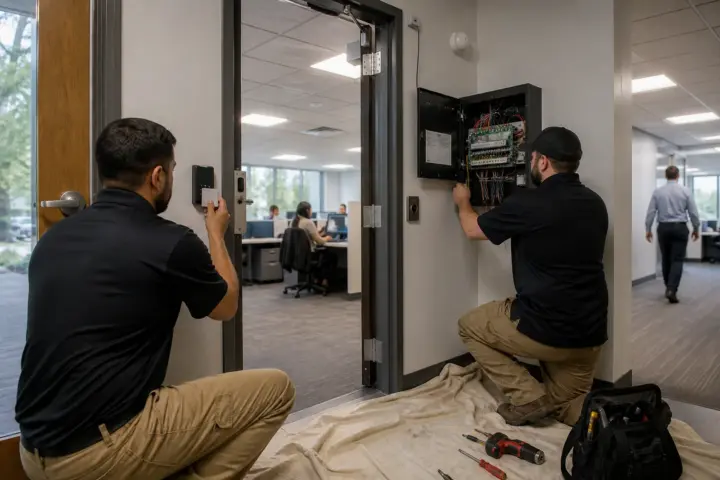
The reader is the visible part of an access-controlled door. Most of the installation work is hidden: cable routes, power supplies, controller locations, lock connections, door contacts and the path back to the network. Those details decide whether the finished system is serviceable or a future puzzle.
Define the access control wiring requirements before comparing bids. Give every installer the same door list and identify the reader, lock, request-to-exit device, door-position switch, intercom or camera connection expected at each opening.
Start at the door, then trace the whole route
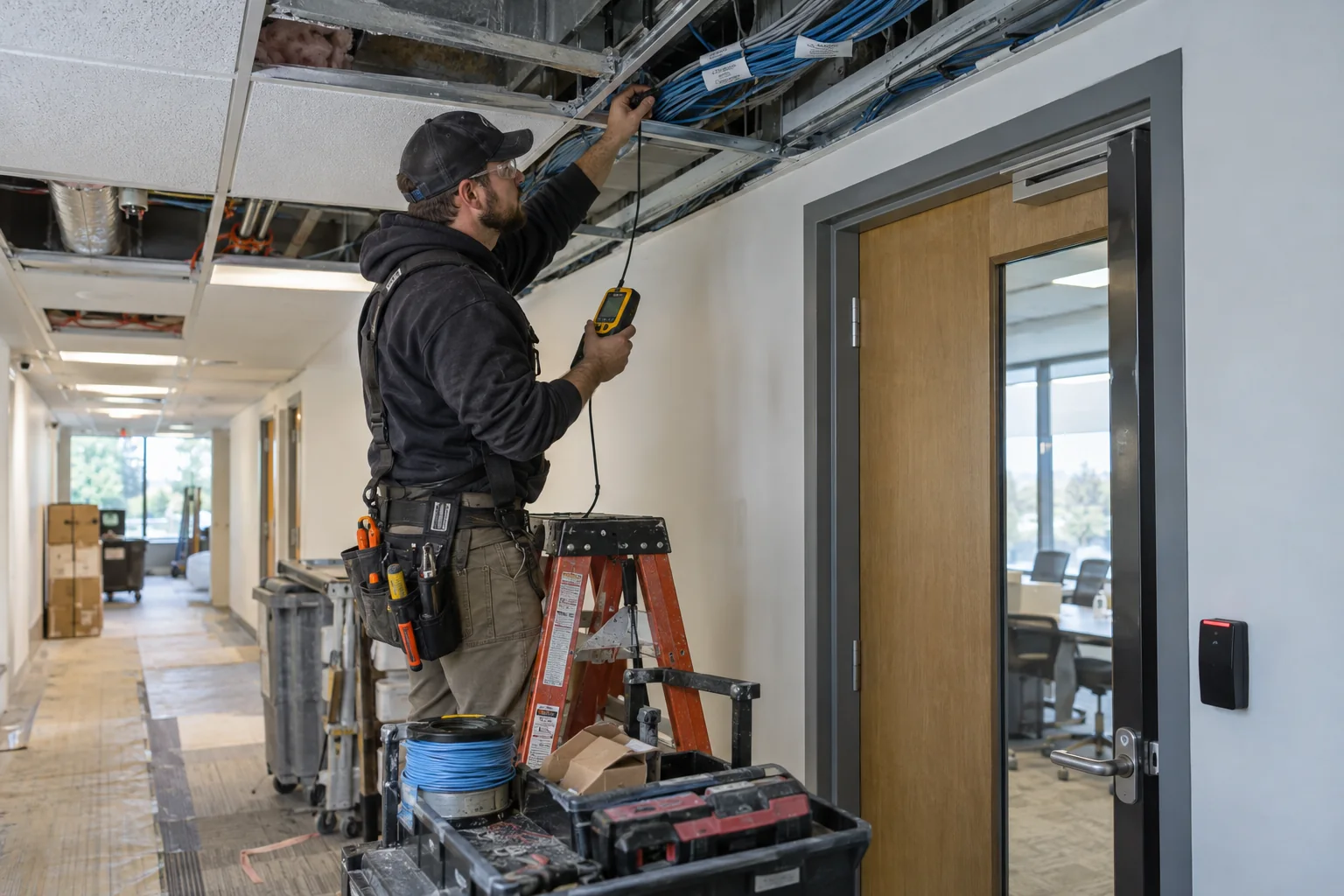
A site walk should examine ceiling access, wall construction, fire-rated assemblies, existing pathways and the distance to the proposed controller. Renovated spaces often contain abandoned low-voltage cable that shouldn’t be mistaken for reusable infrastructure. Ask the installer to state which existing cable has been tested and which runs will be replaced.
Locking hardware deserves its own review. An electric strike, electrified panic device and magnetic lock have different power and door-preparation needs. A qualified professional must also review egress, fire and life-safety requirements for the actual opening. The existing-building installation checklist outlines the other field conditions worth recording.
Ask who provides power, network and pathways
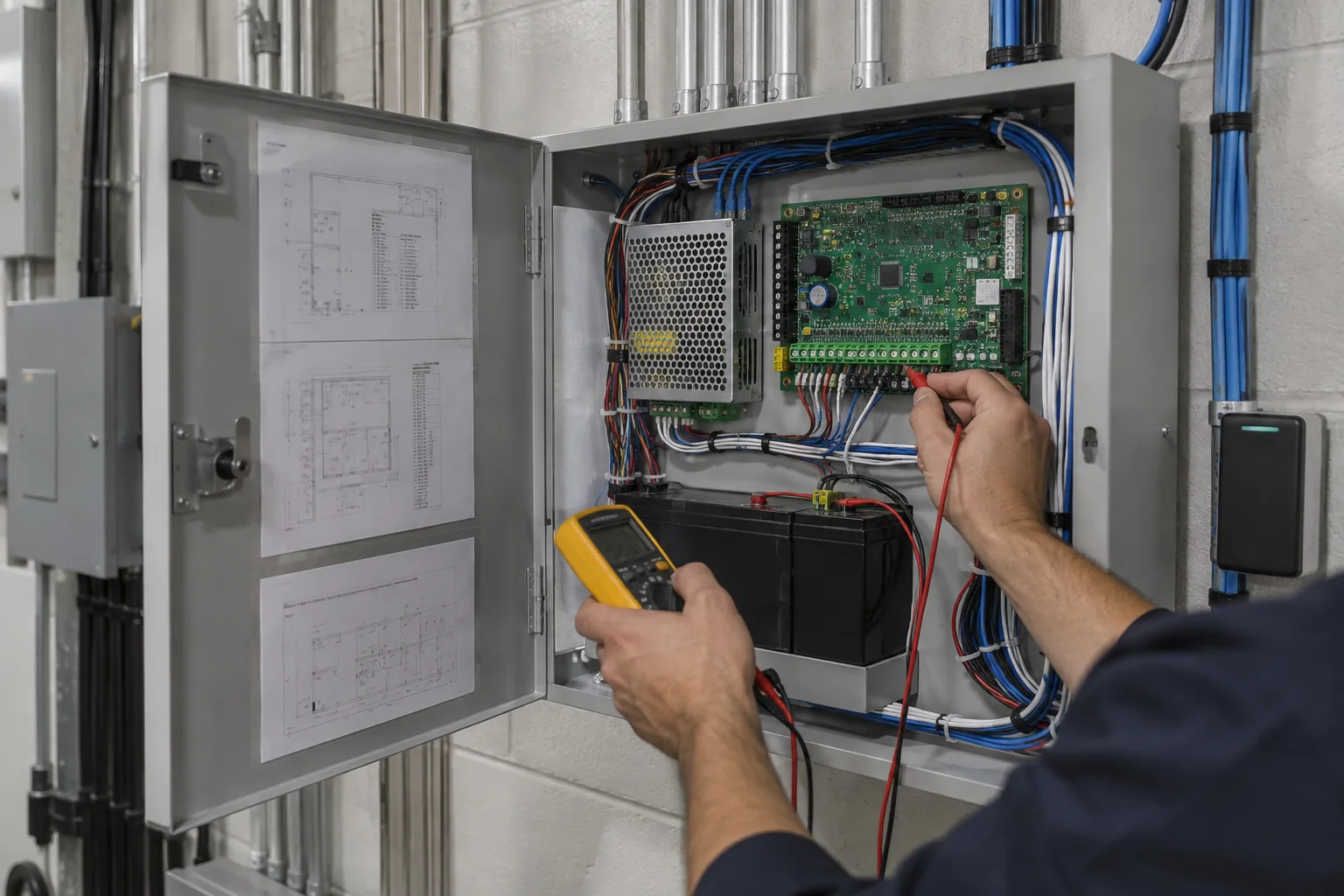
“By others” is where schedules slip. The quote should name who provides branch power, network ports, conduit, sleeves, patching, painting and any lift work. It should also explain what happens during a power failure and which devices need battery backup. For cloud-managed systems, compare that scope with the connectivity assumptions in the cloud versus on-premises guide.
Keep access-control traffic on a network design approved by the organization’s IT team. Controller addresses, firewall rules, remote support and credential security shouldn’t be improvised on installation day.
What wiring documentation should the installer deliver?
Request an as-built door schedule, controller and power-supply locations, cable identifiers, device models and tested operating behavior. Labels need to match the drawings and remain readable inside enclosures. A future technician should be able to identify one troubled door without tracing every blue cable above the ceiling.
Can existing access control wiring be reused?
Sometimes, after its type, condition, route and performance have been verified for the proposed equipment. Don’t assume a cable is suitable because it reaches the right opening. The new system’s manufacturer requirements and the site’s applicable codes still govern.
Use the commercial access control system overview to define devices, then review the access control FAQs with facilities and IT. When the door-by-door scope is ready, compare installation prices against that same documented plan.