A commercial access control system decides who can enter a controlled opening, when entry is allowed and what event is recorded. The strongest design connects physical door hardware with credentials, controllers, software and a practical administrative process.
Electronic door access starts at the opening
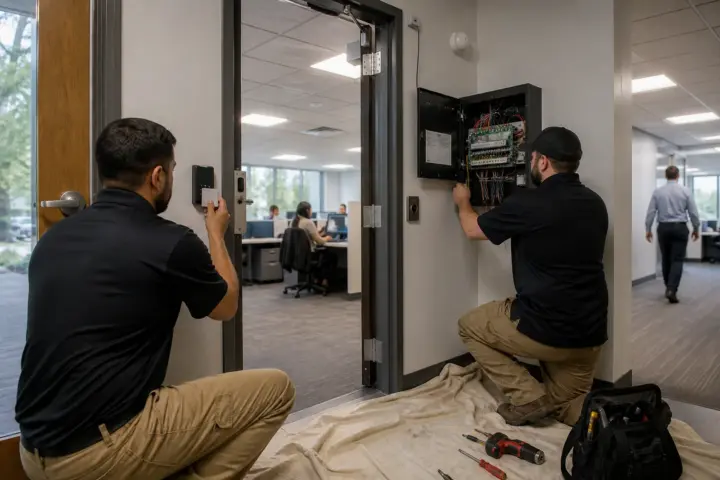
Readers do not secure doors by themselves. Electric strikes, electrified locksets, magnetic locks or wireless electronic hardware perform the locking work, while door-position switches and request-to-exit devices report condition and preserve normal exit. Survey the frame, latch, closer, panic hardware, fire rating and cable route before selecting a device.
Compare credential types by daily use
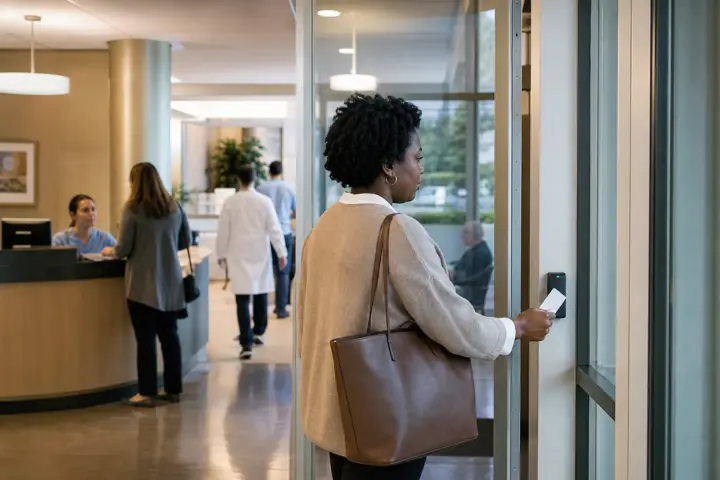
Cards and fobs are economical and familiar. Mobile credentials can simplify remote issuance, but require supported phones, enrollment and recurring-fee review. PINs may fit selected applications but shared codes weaken accountability. Biometrics can support restricted areas when privacy, enrollment and fallback access are addressed.
Controllers and software determine administration
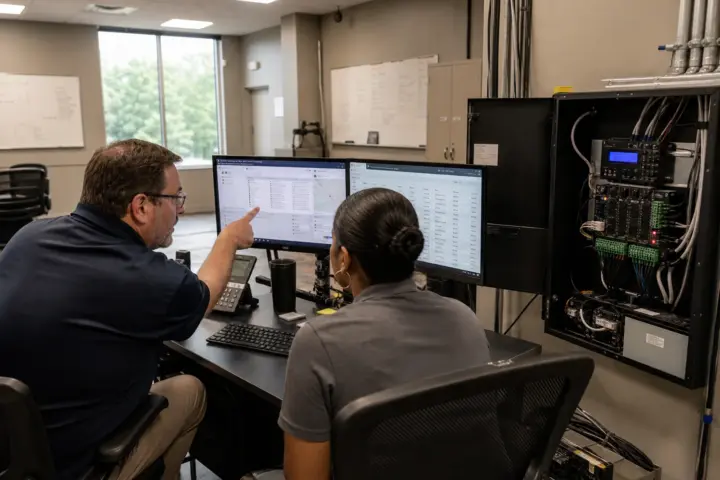
Confirm role-based permissions, schedules, alerts, event retention, exports, administrator audit logs and outage behavior. Cloud systems can simplify multi-site management; locally hosted platforms can fit organizations with defined on-premise responsibilities. Neither architecture replaces account security, backups and a documented support plan.
Integrations must be specific
Cameras, alarms, visitor tools, elevators and HR systems can add value when the proposed products have a supported interface and a named owner. Ask for a demonstration and written responsibility instead of relying on a generic integration claim.
Ready to compare a complete scope?
Use one written brief for every provider.
Check Access Control Prices