Commercial access control systems in Utah should be compared on the complete door, credential and support plan—not a reader price in isolation. Offices, schools, warehouses, healthcare facilities and multi-site employers use electronic access to replace uncontrolled keys, limit entry by role and retain a useful record of door activity. The right design depends on the property, its adopted codes, the people who administer access and the way each entrance is used.
Plan Utah access control around each opening
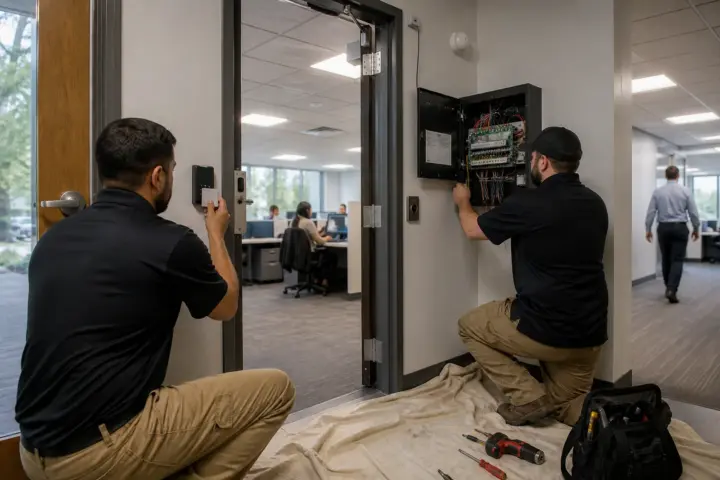
A reliable scope begins with a door survey. The installer should record the frame, existing lock and latch, door closer, panic hardware, traffic direction, power route and network option at every proposed opening. Exterior storefront doors, steel service doors, glass entries, interior restricted rooms and vehicle gates rarely need identical hardware. Proposals should identify electric strikes, electrified trim, magnetic locks or wireless locks by model and explain any locksmith or door-repair work that is excluded.
Electronic access must preserve code-compliant egress. Ask who coordinates fire-alarm release, request-to-exit devices, door-position switches, emergency power and inspections. Requirements can vary by adopted code and local authority, so a provider should not treat a generic diagram as approval for a particular property. The NFPA 101 Life Safety Code offers national context, while the responsible Utah authority determines what applies to the installation.
Compare credentials, software and administration
Cards and key fobs are familiar and economical. Mobile credentials can simplify remote enrollment and reduce badge handling, but buyers should compare phone compatibility, enrollment procedures and recurring fees. PINs may be appropriate for selected low-risk use, although shared codes reduce individual accountability. Biometrics warrant careful evaluation of privacy, enrollment, fallback entry and the consequence of a failed read. Our access control systems overview explains the practical differences.
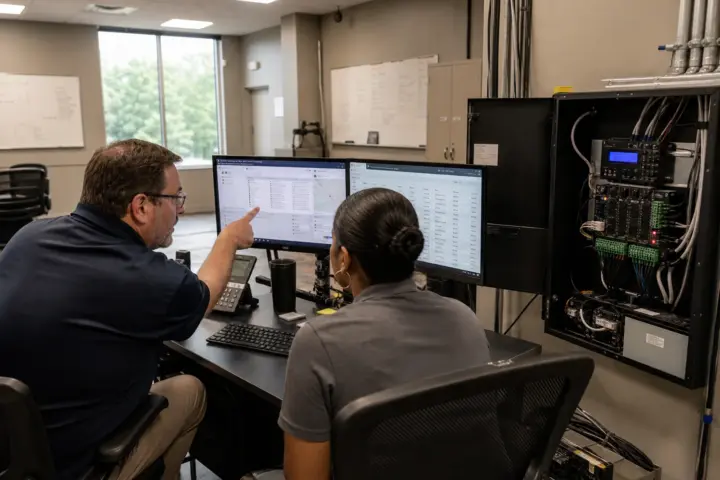
Software should make ordinary work clear: add a user, remove a terminated employee, assign a schedule, unlock a door for an approved event and investigate an exception. Ask whether permissions can follow roles, whether sensitive administrator actions are logged and whether a multi-location organization can separate corporate oversight from local control. Data ownership, exports, multifactor authentication, backups and software-update responsibility belong in the evaluation.
Request comparable access control installation prices
Every bidder should receive the same door count, credential quantity, user estimate, integration list and completion expectations. Require separate visibility into hardware, cabling, power, door preparation, permits, configuration, training, software licenses, warranty and ongoing support. If the project connects cameras, visitor management, elevators, alarms or human-resources software, the proposal should name the supported method and the party responsible for testing it.
A low initial total may omit necessary locking hardware or shift costs into annual subscriptions. Compare proposals across the same ownership period and document what happens during power, network and internet interruptions. The commercial access control buyer’s guide and access control pricing form help create a consistent brief before providers are compared.
Before award, ask the likely system administrator to complete a real product demonstration: enroll a user, limit the user to selected doors, change a schedule, revoke the credential and retrieve the related event. This small exercise often reveals whether an attractive platform will support ordinary work without constant installer assistance. Record the accepted workflow and keep it with the system documentation for training and future review. Repeat the test after major software, controller or credential changes so expected behavior remains verified.
Find access control guidance for Utah cities
Local property types, installer travel and the condition of existing doors influence the final scope. Review detailed planning pages for Ogden, Provo, Salt Lake City, West Valley City. Each city page keeps the same disciplined comparison process while addressing a more specific market. A strong Utah proposal should explain the current installation, future capacity, administrative workflow and total recurring cost in language the owner can verify before work begins.
Compare the same access control scope.
Describe the property, doors, people and integrations once.
Request Access Control Prices