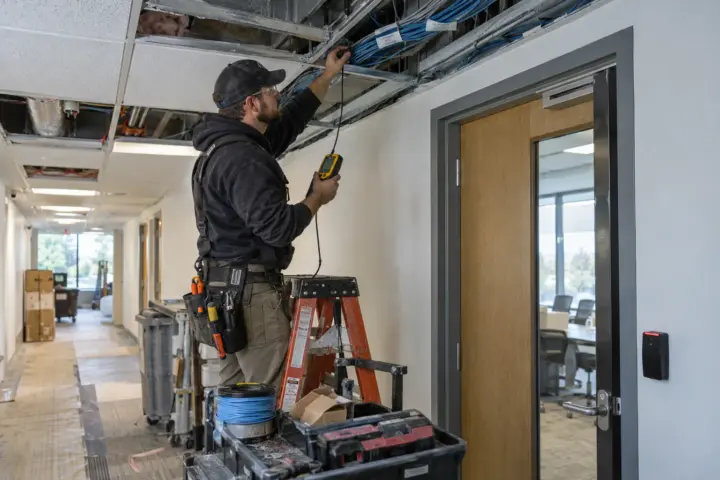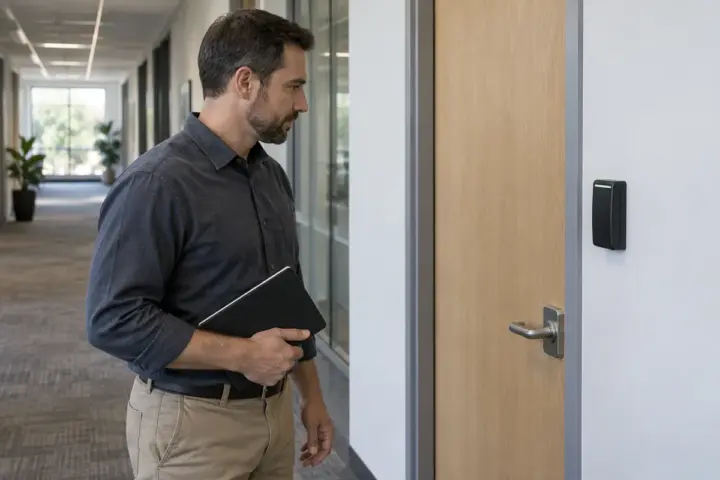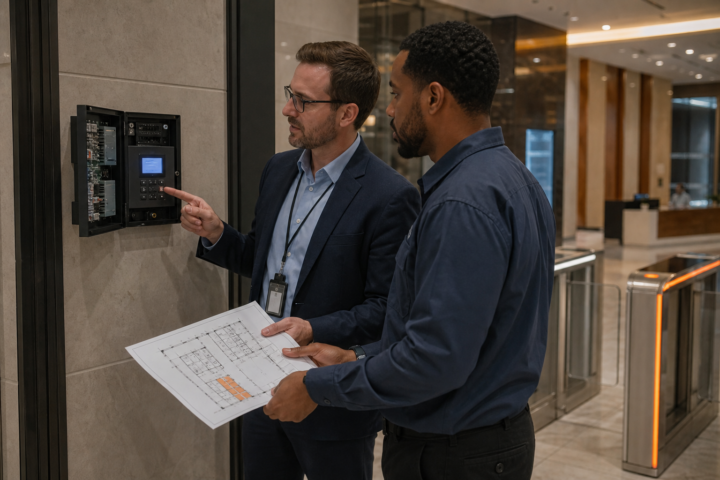

An access control installation timeline depends on more than the number of doors. Existing hardware, wiring routes, power, network readiness, material lead times and hours when a door can be taken out of service all affect the plan. A useful access control price comparison should therefore begin with a verified door schedule.
The site survey sets the real starting line
Walk every included opening with the installer. Record door and frame condition, lock type, egress hardware, reader location, nearby power and the proposed cable route. Photograph or label exceptions so a field condition does not become a surprise after equipment arrives. The existing installation checklist provides a practical survey structure.
Confirm which doors remain secure and usable during work. Busy entrances, healthcare areas and shared tenant doors may need phased or after-hours installation. Those constraints belong in the schedule and price.
Separate preparation, installation and commissioning
Preparation may include approvals, permits, network configuration, electrical work, door repair and credential data. Installation covers hardware, cabling, panels and devices. Commissioning should verify each door state, request-to-exit function, credential permissions, schedules, alarms and reporting. Treating all three as one vague “install” task makes progress difficult to measure.
Review the proposed architecture through the commercial access control overview and compare recurring software or hosting needs in the access control FAQs.
Plan enrollment, training and closeout before launch
Decide who prepares users, access groups and schedules, and how existing credentials will be replaced or retained. Administrators need training on adds, removals, reports and emergency changes. Facilities staff need door-specific information and an escalation path.
Closeout should include test results, device and door records, administrator access, warranties and as-built information. Compare these deliverables against the buyer’s guide and the access control cost guide.
The schedule is credible when dependencies have owners and acceptance checks—not when every phase is compressed into the promised installation week. A phased plan may take longer on paper and still reduce business disruption and rework.
Build contingency into doors that serve as primary entrances, accessible routes or critical operations. If unexpected frame repair or cable access delays one opening, the building still needs a secure operating plan. Sequence lower-risk doors first when practical so the team can confirm installation and programming methods before reaching the most disruptive locations. Record schedule changes against the original dependency rather than simply moving the completion date.
Share the updated sequence with security, facilities and affected occupants before each phase begins.