Retail stores combine public space with stock, cash-handling areas, receiving doors and employee-only rooms. The useful access-control question is not how many doors can take a reader; it is where keys and informal access create recurring risk or delay.
Review commercial keyless entry systems around opening, closing and delivery routines.
Prioritize the doors tied to turnover and inventory
Employee entrances, stockrooms, manager offices and receiving doors often deliver the clearest operational value. Fitting-room and sales-floor issues may require different controls and policies, not simply more readers.
A specialty retailer opening its fifth store
Each manager currently holds keys that must be collected or replaced after turnover. Vendors receive door codes that remain active longer than intended, and headquarters cannot confirm who opened a store early.
The retailer adopts named credentials, automatic expiration for vendors and a common schedule template. Local managers can request exceptions, but shared permanent codes are retired.
Control opening and closing roles
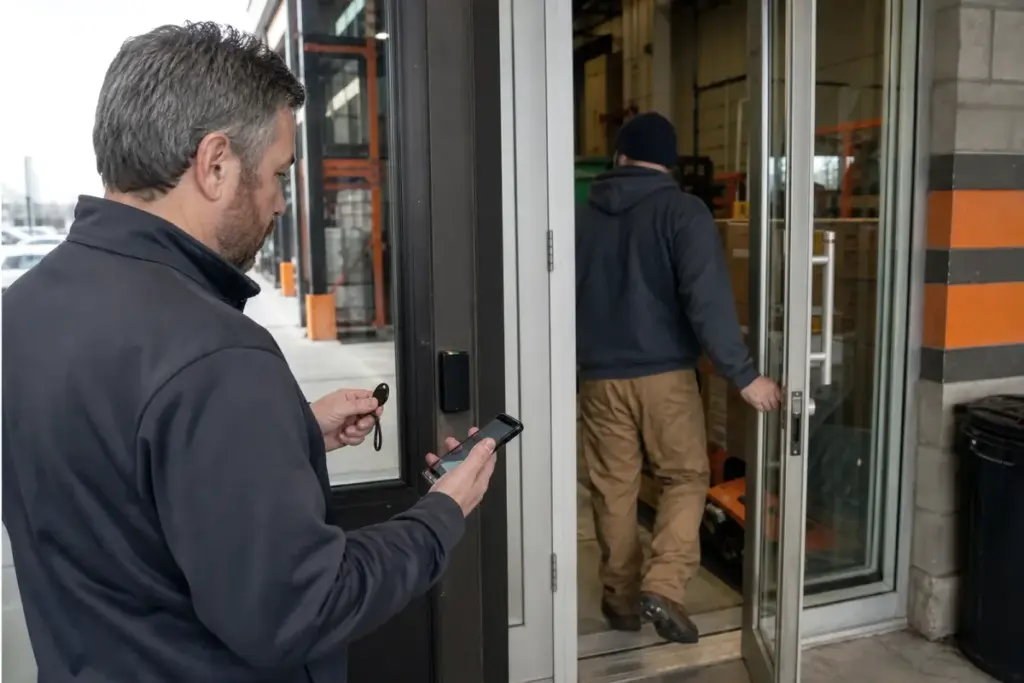
Permissions should match assigned responsibility and schedule.
Handle deliveries explicitly
Receiving access needs time windows, oversight and a fallback process.
Protect stock and cash areas
Use narrower groups for truly sensitive rooms.
Standardize without ignoring stores
Mall, street and standalone locations may require different hardware.
Review events consistently
Define which exceptions prompt action and who reviews them.
Questions worth asking before you choose
- Which keys or codes are hardest to manage?
- How do vendors and deliveries enter?
- Can credentials expire automatically?
- What varies by store type?
- Who responds to after-hours events?
What a useful proposal should make clear
A useful access-control proposal identifies every opening, door condition, lock and reader hardware, credentials, controller and software architecture, network and power work, life-safety coordination, installation assumptions, testing, training, recurring fees, warranty, support and future expansion. Final designs require qualified local professionals and applicable code review.
A practical next step
List store types and controlled doors when requesting retail access control quotes.
Frequently asked questions
Can retail access control manage many stores?
Yes, many systems support centralized administration with local roles.
Should stockrooms have readers?
Often they are a priority, depending on layout and operations.
Can access logs prevent theft?
Logs add accountability, but they are one part of broader retail controls.